Skid-steer Loader Embroidery Design Review for Craft Fair Sellers
Every seasoned embroidery designer knows the feeling of opening a new machine embroidery design file and instantly imagining how it will look on a tote bag, apron, or cap at the weekend craft fair. When I first opened the Skid-steer Loader embroidery file, I saw immediate potential for the handmade product market. This design hits a sweet spot between recognizable machinery and charming detail that appeals to construction workers, farm families, equipment enthusiasts, and anyone who appreciates rugged, hands-on work. Let me walk through what makes this embroidery design worth your hoop time and how to turn it into a reliable seller at your next market.
First Impression: Bold, Recognizable, and Market-Ready
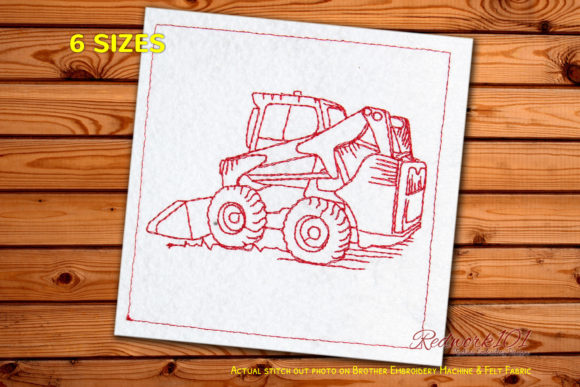
The Skid-steer Loader design makes a strong first impression. It is bold without being overwhelming, detailed without being fussy. The silhouette of the loader is clear and immediately identifiable, which is critical for craft fair product success. Customers browsing a booth of embroidered goods need to understand what they are looking at within two seconds. This design delivers that instant recognition. The mood is rugged, work-ready, and slightly nostalgic, appealing to customers who value practicality and blue-collar pride. It is not cute or elegant, it is honest and sturdy. That honesty translates well into handmade products that feel personal and authentic.
The optional box stitch and outer box color add flexibility. Depending on how you use them, you can make the design feel more finished and framed, or keep it open and airy. The outer box being a different color from the main design is a smart detail. It allows you to create contrast without adding complexity to the thread colors. You can skip the box entirely for a cleaner look or use it to anchor the design on larger items. This kind of modular thinking is a blessing for small shop product lines where you want variety without maintaining multiple files.
Tote Bags and Market Bags
This is where the Skid-steer Loader design truly earns its place in your booth. A sturdy canvas tote bag with this loader embroidered front and center draws the eye immediately. The bold shape fills the space well without needing to be oversized. I recommend hooping a standard 5x7 or 6x10 area for most tote bags. The design reads clearly from across a booth table, which is essential when customers are scanning quickly. Pair it with a contrasting thread color, like bright orange or yellow on a natural canvas bag, and you have a product that stops traffic.
Aprons for the Workshop or Kitchen
An apron embroidered with the Skid-steer Loader design feels like a natural fit. Whether it is a heavy-duty workshop apron or a playful kitchen apron, the design adds character. The loader sits well on the chest or center panel. The optional box stitch can help define the area if the apron has a pocket or seam. For aprons, I suggest using the design without the outer box to keep it feeling integrated rather than stuck on. The stitch density works well on cotton twill and denim aprons, both of which are popular at handmade market booths.
Tea Towels and Kitchen Linens
Tea towels are a staple for Etsy sellers and craft fair vendors. The Skid-steer Loader design at a smaller scale, around 3 to 4 inches wide, makes a lovely accent on a linen or cotton tea towel. It pairs well with farmhouse or rustic kitchen themes. The design does not rely on tiny details that get lost in the texture of a towel. The solid shapes hold up well against the weave. Just be mindful of fabric texture and use a cutaway stabilizer to prevent distortion on loose-weave towels.
Caps and Hats
Embroidered caps are a high-margin handmade product at any craft fair. The Skid-steer Loader design works on the front panel of a structured cap, especially if you keep the size around 2 to 2.5 inches wide. The design is simple enough that it does not overwhelm the curved surface. However, you must test the design on a cap curve before selling in quantity. The outer box, if used, may need to be omitted on caps because the brim curvature can distort straight lines. I recommend a flat or slightly curved cap style for best results.
Embroidered Patches
Patches are a fantastic way to offer low-cost, high-volume items at your booth. The Skid-steer Loader design converts beautifully into an iron-on or sew-on patch. The solid areas stitch out cleanly, and the shape is easy to cut around. Patches appeal to customers who want to personalize their own jackets, bags, or tool rolls. You can produce a batch of patches in different thread colors, like yellow, red, green, or black, and let customers choose. This is a smart way to test the market without committing to large runs of finished products.
Fabric Pouches and Small Cases
Small zipper pouches, pencil cases, and tool rolls are popular craft fair product categories. The Skid-steer Loader design at a 3 to 4 inch size fits perfectly on the front panel of a pouch. These items sell well as gifts for construction workers, mechanics, and hobbyists. The design adds perceived value to a simple pouch, allowing you to price it higher than a plain version. The thread colors pop nicely against dark or light fabrics, so you can offer options for different tastes.
Pillow Covers and Home Decor
Pillow covers with embroidery are a growing niche at handmade market events. The Skid-steer Loader design on a 12x12 or 16x16 pillow cover creates a conversation piece. It works well in a man cave, garage, or farmhouse living room. The design scales up nicely without losing clarity. Use a heavier stabilizer to support the stitch density on upholstery-weight fabric. The outer box can serve as a border that frames the design nicely on a pillow front.
Selling and Production Points for Craft Fair Success
From a selling perspective, the Skid-steer Loader design is easy to understand at a glance. Customers do not need to squint or ask what it is. That instant recognition is gold at a busy craft fair where attention spans are short. The design works both as a small accent on a towel or pouch and as a large focal design on a tote bag or apron. This versatility means you can offer a coordinated product line, creating a stronger booth display. When customers see the same design on multiple items, they perceive your brand as cohesive and professional.
Photography for online listings, especially on Etsy, is straightforward with this design. The bold shapes photograph well in natural light. A mockup on a tote bag or apron in a lifestyle setting, like a workshop or farm, helps buyers visualize the product. Consider creating a printable mockup or using a digital embroidery file preview to show the design before stitching. Clear, well-lit photos of the finished product will increase click-through rates and conversions.
For batch production, the Skid-steer Loader design is efficient. The stitch count is reasonable for a machine embroidery design of this type. The thread changes are minimal, especially if you skip the optional box stitch. You can produce multiple items in a single sitting without frequent bobbin changes or re-hooping frustration. This repeatability is essential for commercial embroidery sellers who need to build inventory for a weekend show.
Careful-Use Notes for Professional Results
Every experienced embroidery designer knows that not every design stitches out perfectly on every surface. Here are the specific considerations I have identified for the Skid-steer Loader design:
- Dense stitch areas: The loader body and wheels may have areas of higher stitch density. Test on a scrap of your intended fabric first. If the design feels too dense, reduce the stitch count in your software or use a lighter-weight stabilizer to avoid puckering.
- Tiny details: The design does not rely on extremely small elements, which is a strength. However, any fine lines in the loader frame or bucket could lose clarity on textured fabrics like heavy canvas or toweling. Check the design at 100% zoom before stitching.
- Small lettering: There is no text in the base design, which is a plus. If you plan to add custom text, such as a name or business name, keep the letter height at least 0.25 inches to maintain legibility.
- Thick fabric: On denim, canvas, or quilted fabrics, use a sharp needle and a medium-weight cutaway stabilizer. The hoop size should be appropriate for the fabric thickness to avoid slipping.
- Textured towels: Tea towels with a loose weave or waffle texture can cause the design to sink into the fabric. Use a water-soluble stabilizer topper to keep the stitches crisp on top of the texture.
- Curved cap surfaces: As mentioned, test the design on a cap before committing to a batch. The curved surface can distort straight lines, especially if you use the outer box. Consider using the design without the box for caps.
- Dark fabric: The design reads well on dark fabric if you choose high-contrast thread colors. Bright yellow, white, orange, or light blue will pop on black, navy, or dark green. Avoid dark thread on dark fabric, or the design will disappear.
- Smaller sizes: If you resize the design below 2.5 inches, some details may become unclear. Always test a small version on scrap fabric before producing in quantity. The design holds up better at medium to large sizes.
Visual Appeal and Customer Engagement
The Skid-steer Loader design has a visual appeal that resonates with a specific but loyal customer base. At a craft fair, it will attract the attention of men and women who work in construction, farming, landscaping, or heavy equipment operation. It also appeals to hobbyists, collectors, and people who appreciate the aesthetic of machinery. The design does not need to be cute or funny, it is authentic to its subject, and that authenticity builds trust with buyers. Customers who see the design on a tote bag or apron often stop to talk about their own experiences with equipment, creating a personal connection that leads to sales.
For handmade product sellers, that engagement is gold. A booth where customers linger and share stories is a booth that sells. The Skid-steer Loader design becomes a conversation starter, especially when displayed on a sample tote or apron at eye level. Pair it with a sign that says "Custom Orders Welcome" and you can collect commissions for personalized items, increasing your average order value.
From a brand consistency standpoint, the design fits well with a rustic, farmhouse, or industrial theme. If your booth already features tools, trucks, or farm animals, this design will complement your existing design assets. It also photographs well for social media posts, showing off the quality of your embroidery file and the craftsmanship of your finished product.
Practical Embroidery Designer Notes Before You Stitch
Before you load the Skid-steer Loader design into your machine and start producing for your next craft fair, take these steps to ensure professional results:
- Test the design on scrap fabric that matches your intended product. Use the same fabric weight, color, and texture. This is non-negotiable. A test run will reveal any issues with stitch density, thread tension, or design scaling.
- Check thread contrast against the fabric. The outer box, if used, should be a color that complements the main design. The description notes that the outer box is often a different color, so plan your thread palette accordingly. High contrast between the loader and the background fabric will make the design pop.
- Review spacing and placement on each product type. A tote bag needs the design centered and at a height that avoids the handle area. An apron needs the design placed above the waist or on the chest pocket. A cap needs the design centered on the front panel. Measure twice, hoop once.
- Confirm hoop size before you cut fabric or stabilizer. The Skid-steer Loader design likely fits within a standard 4x4 or 5x7 hoop, but verify the dimensions in your embroidery software. If you need to resize, do so proportionally to avoid distortion.
- Inspect stitch density in your software. Look for areas that might be too dense, especially in the wheels or bucket. Reduce density if needed, or switch to a lighter stabilizer to prevent the fabric from puckering.
- Use the right stabilizer for your fabric. Cutaway stabilizer for knits and stretchy fabrics, tearaway for wovens, and water-soluble topper for textured surfaces. The wrong stabilizer can ruin an otherwise perfect stitch-out.
- Create at least one real mockup of your best-selling product. Photograph it well and use it in your Etsy seller listings, social media, and booth display. A real photo of a finished product is far more convincing than a digital preview.
- Compare fabric colors before committing to a batch. The design works on light and dark fabrics, but each combination changes the mood. Offer a range of colors to appeal to different customer tastes.
- Confirm commercial licensing before selling finished products. Check the terms of the digital embroidery file you purchased. Most machine embroidery designs allow commercial use, but some require a separate license. Never assume, always verify. This protects your business and your reputation.
Final Thoughts on the Skid-steer Loader Design
The Skid-steer Loader is a solid, versatile machine embroidery design that deserves a place in your craft fair product lineup. It is bold enough to catch attention, simple enough to stitch efficiently, and meaningful enough to connect with customers. Whether you are an Etsy seller building an online shop, a small shop product maker preparing for a weekend market, or a commercial embroidery business looking to expand your offerings, this design delivers real value. The optional box stitch gives you flexibility, and the Transportation category theme appeals to a dedicated audience that appreciates quality Embroidery work. Test it, tweak it, and put it on your best-selling products. I expect it will be a steady performer for seasons to come.