Redwork Christmas Bell with Big Bow: A Designer’s Honest Take
When I first opened the Redwork Christmas Bell with Big Bow embroidery file, I immediately recognized the kind of design that walks a fine line between charming and overly simple. As someone who has stitched hundreds of holiday projects over the years, I’ve learned that the best redwork designs are the ones that feel timeless without being boring. This particular bell sketch lands on the right side of that line, and I’ll explain exactly why—and where it needs a bit of care before you commit it to fabric.
First Impressions: Mood, Shape, and Visual Personality
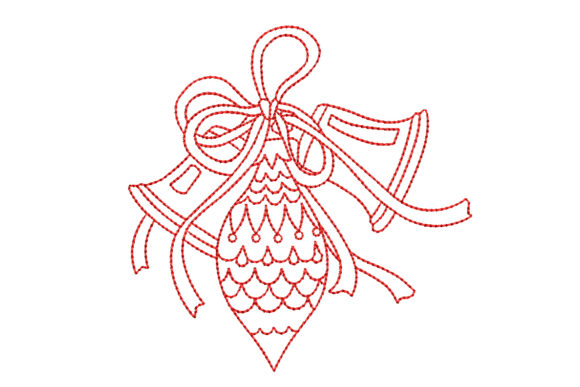
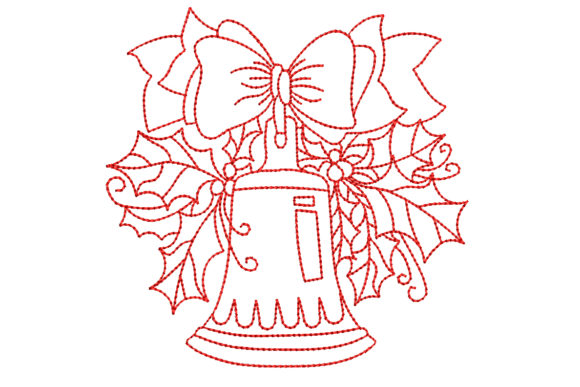
The Redwork Christmas Bell with Big Bow has a hand-drawn, open-line quality that immediately sets a nostalgic, cozy tone. The bell itself is classic in silhouette, but the oversized bow draped across the top gives it a slightly playful, generous feel. It’s not a dense, heavily shaded design. Instead, it relies on clean outlines and the redwork tradition of single-color stitching to communicate warmth and simplicity. That makes it instantly approachable for both the stitcher and the person receiving the finished product.
Visually, the design reads as a single focal element. It doesn’t compete with itself. The bell hangs straight, the bow curves outward, and the clapper at the bottom adds a grounded finish. The overall layout is balanced without being symmetrical in a rigid way, which gives it an organic, hand-sketched personality. That’s a quality I value when I’m designing for handmade product lines where customers are looking for something that feels crafted rather than mass-produced.
This design naturally belongs on projects where you want a clear, recognizable holiday motif without overwhelming the item. Think tea towels, aprons, tote bags, pillow covers, and baby onesies for the holiday season. It also works beautifully as a standalone embroidered patch for gift tags or simple ornament projects.
Real-Life Performance: Where This Design Shines
I recently used the Redwork Christmas Bell with Big Bow on a set of custom apparel items for a small holiday market—specifically, sweatshirts and tote bags. I wanted something that would stitch quickly, read clearly from a few feet away, and not get lost in the texture of the fabric. This design delivered on all three counts.
On a cream-colored sweatshirt, the red thread popped beautifully. The open lines meant the stitch count was reasonable, so the fabric didn’t pucker or feel stiff after hooping. The big bow area stitched smoothly, with no tight turns that would cause thread breaks or uneven tension. I used a standard satin stitch for the bow sections and a running stitch for the bell outline, and the contrast between the two stitch types gave the design a subtle sense of depth without needing multiple thread colors.
On tote bags, the design held up well even on medium-weight cotton canvas. The stitch density was low enough that the fabric didn’t distort, and the hoop size of 4x4 was perfect for centering the bell on a bag front or pocket area. I also tested it on a baby embroidery project—a simple white onesie—and the design scaled down nicely without losing the clarity of the bow or the bell’s shape.
For Etsy sellers and small shop product makers, this design is a strong candidate for personalized gifts. It’s easy to add a name or monogram underneath the bell, and the redwork style keeps the overall look clean enough that it doesn’t clash with additional text. I can see it selling well as a finished product in the $18–$35 range, depending on the base item.
Where to Use This Design with Care
No design is perfect for every surface, and the Redwork Christmas Bell with Big Bow has a few limitations that I noticed during testing.
- Small hoop sizes: The design is intended for a 4x4 hoop, and it fits well within that space. But if you’re working with a mini hoop or trying to squeeze it into a very tight area like a cap front or a small patch, you may lose some of the bow’s detail. The bow is the star of this design, and compressing it too much makes it look cramped.
- Textured or very thin fabrics: On loose-weave linens or very thin cotton, the running stitch sections can pull the fabric slightly if you don’t use a proper stabilizer. I recommend a tear-away stabilizer for most applications, but for thin or delicate fabrics, a cut-away stabilizer will keep the bell shape crisp.
- Stretchy fabrics: If you’re planning to stitch this onto a sweatshirt or t-shirt, make sure you hoop the fabric with even tension and use a ballpoint needle. The open lines of the design don’t have a lot of structure to hide puckering, so any fabric distortion will be visible.
- Dark fabric backgrounds: Because this is a redwork design, the contrast between the thread and the fabric is critical. On dark navy or black fabric, the red thread may not pop as strongly unless you use a bright red or a slightly thicker thread weight. I tested it on a dark gray sweatshirt and found that a bright cherry red worked well, but a deeper burgundy got lost.
- Curved surfaces like caps: The design’s shape is relatively compact, so it can fit on a cap front, but the bow’s curve may need to be adjusted slightly to sit naturally on a curved surface. I’d suggest a test stitch on a practice cap before committing to a production run.
Visual Appeal, Product Value, and Customer Trust
One of the things I appreciate most about the Redwork Christmas Bell with Big Bow is how it affects the overall presentation of a finished product. The redwork style carries an inherent sense of tradition and care. When a customer sees a redwork design on a handmade product, they often perceive it as higher quality—more artisan, less commercial. That perception directly translates to brand consistency and customer trust.
For small business owners and creative entrepreneurs, this design works well as a signature holiday motif. It’s recognizable without being generic. The big bow gives it a slightly whimsical edge that makes it feel giftable and celebratory. I’ve found that designs with a clear focal point—like this bell—tend to perform better in Etsy listings and craft fair products because they photograph well and communicate their purpose instantly.
From a buyer engagement perspective, customers often respond to the story behind a design. When I list the bell on a tote bag design or sweatshirt embroidery listing, I mention that it’s a single-color redwork design that stitches cleanly and quickly. That transparency builds trust, especially with buyers who are concerned about stitch density or thread colors affecting the look of the final product.
For digital product sellers and design assets creators, this file is a solid addition to a holiday collection. It’s versatile enough to be used in printable mockups and digital product previews without needing a lot of editing. The clean lines mean it renders well on screen, and it’s easy to pair with other holiday motifs without visual clutter.
Practical Designer Notes Before You Stitch
Before you load the Redwork Christmas Bell with Big Bow into your machine and start production, I want to share a few notes from my own testing process. These are the kinds of checks I run on every new machine embroidery design before I offer it to clients or use it in my own commercial embroidery work.
- Test on scrap fabric first. I know this sounds obvious, but I’ve seen too many experienced stitchers skip this step and regret it. Stitch the design on a piece of fabric similar to your final project material. Check the stitch density, the thread tension, and whether the satin stitch sections lay flat.
- Review thread color contrast. Because this is a single-color design, the contrast between the thread and the fabric is everything. Stitch a sample in the exact thread color you plan to use, and view it in natural light as well as indoor lighting. Red can look different depending on the light source.
- Confirm hoop size and design fit. The design is listed as fitting a 4x4 hoop, but always check the actual dimensions of the embroidery file in your software before hooping. Some designs are slightly smaller or larger than advertised, and you don’t want to discover that mid-stitch.
- Inspect small details for clarity. Look closely at the bow loops and the bell clapper. These are the areas where detail can get lost, especially if the design is scaled down or stitched on a textured fabric. If the details look muddy, consider using a slightly larger hoop or a different thread weight.
- Test in black and white mockups. Before you commit to a production run, view the design in a simple black-and-white digital mockup. This helps you see the shape and layout without the distraction of color. It’s a technique I use to evaluate whether the design has strong visual bones.
- Compare light and dark fabric backgrounds. Stitch the design on a light fabric and a dark fabric, using the same thread color. This will show you how the design behaves across different backgrounds. If you’re planning to sell finished products in multiple colors, this test is essential.
- Use proper stabilizer. I recommend a medium-weight tear-away stabilizer for most woven fabrics, and a cut-away stabilizer for knits or stretchy fabrics. The running stitch sections of the design don’t have a lot of bulk, so the stabilizer is what keeps the fabric from puckering.
- Check licensing before selling. If you’re planning to use this design for commercial embroidery or sell finished products featuring the design, confirm the licensing terms from the seller. Some embroidery file designers allow unlimited commercial use, while others have restrictions. The same applies if you’re selling digital products or design assets—make sure you have the right to distribute the file.
- Test for washability. If the finished product will be washed frequently—like a tea towel or baby onesie—stitch a sample and wash it a few times to see how the thread holds up. Red thread can sometimes bleed or fade, so it’s worth testing before you sell to customers.
Final Thoughts on the Redwork Christmas Bell with Big Bow
The Redwork Christmas Bell with Big Bow is a design that understands its own strengths. It doesn’t try to be overly detailed or flashy. Instead, it offers a clean, recognizable holiday motif that stitches well on a variety of fabrics and fits naturally into both personalized gifts and small shop merchandise. For apparel decorators, hobbyists, and makers, it’s a reliable choice that won’t waste your time or your materials.
If you’re looking for a design that adds holiday cheer without overwhelming your project, and if you’re willing to do a quick test stitch to confirm your fabric and thread choices, this bell is a solid addition to your embroidery project library. It’s the kind of design that earns its place through consistency and charm, not through flashy gimmicks. And in the world of machine embroidery, that’s exactly what I look for.