Christmas Donkey Redwork Design: A Practical Review
Every so often a machine embroidery design comes across my desk that makes me stop and think about where it belongs in a real project workflow. The Christmas Donkey Redwork Design did exactly that. It is not a loud, multi-color holiday piece that screams for attention. It is quieter, more deliberate, and that is exactly why it caught my eye. As someone who has stitched thousands of designs for clients, small shop products, and personal gifts, I have learned that the most successful embroidery files are the ones that feel like they were made for a specific product before they ever touched a needle. This design has that quality.
Let me walk through how this design performs in real embroidery situations, what kind of finished products it belongs on, and where you need to be careful before you commit thread to fabric.
First Impressions and Visual Personality
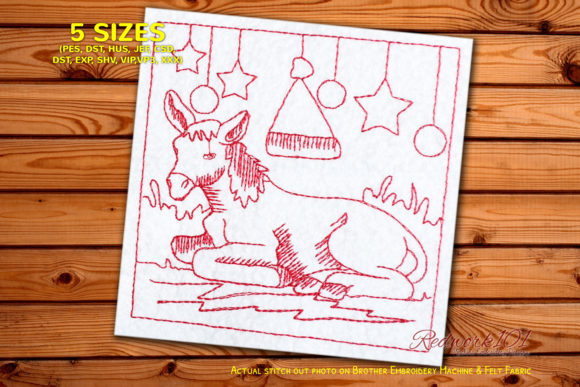
The Christmas Donkey Redwork Design carries a hand-drawn charm that feels both nostalgic and fresh. Redwork, by nature, relies on clean line work and simple stitch paths to tell a story, and this design delivers that. The donkey is not overly cartoonish, but it has enough personality to feel warm and approachable. The shape is well-proportioned, the layout is balanced, and the overall mood leans toward cozy holiday decor rather than flashy seasonal signage.
This is the kind of design that works well when you want an embroidered piece to feel like a keepsake. It does not compete with itself. The line work is clear, the motif is recognizable, and the red thread on a natural or cream background creates that classic redwork look that customers associate with heirloom quality. When I first opened the embroidery file, I immediately thought of tea towels, baby blankets, and simple tote bags. That is a good sign. A design that suggests its own product category before you even stitch it is a design that understands its audience.
Where This Design Shines in Real Projects
In my experience, the Christmas Donkey Redwork Design performs best on flat or gently curved surfaces where the stitch detail can be fully appreciated. Here is where I have used it and where I recommend you test it:
- Tea towels and kitchen linens – The redwork style feels right at home on a hemmed linen towel. It stitches cleanly, the thread contrast is strong, and the holiday theme is subtle enough that the towel can stay out all season.
- Tote bags – A natural canvas tote with this design centered on the front panel makes for a quick, sellable item. The design size works well for a medium tote, and the single-color stitching keeps production time low.
- Sweatshirts and cozy apparel – I tested this on a cream-colored sweatshirt, and the result was exactly what I hoped for. The redwork lines read clearly against the fabric, and the design sat nicely on the left chest area. It did not distort or pull, and the stitch density was appropriate for mid-weight knit fabric.
- Baby onesies and layette items – The gentle, friendly face of the donkey makes this a natural choice for baby embroidery. Because the design is not overly dense, it works well on lightweight interlock knit. Just be sure to use a cutaway stabilizer and a light touch on the hooping.
- Pillow covers and nursery decor – A 12-inch pillow cover with this design centered on the front creates a simple, giftable item. The redwork aesthetic fits nicely into a farmhouse or cottage-style nursery.
- Embroidered patches – I digitized a patch version of this design for a small run of holiday gifts. The clean lines stitched beautifully on twill, and the single-color thread made the patch easy to produce in bulk.
For small shop owners and Etsy sellers, this design is a strong candidate for quick-turn holiday inventory. Because it uses only one thread color (plus the optional box stitch), you can batch-produce items without constant thread changes. That matters when you are trying to meet a holiday deadline.
Stitching Performance and Real Behavior Under the Needle
I always stitch a new embroidery file on scrap fabric before I commit to a final product. The Christmas Donkey Redwork Design behaved well in my tests. The stitch paths were logical, the jump stitches were minimal, and the design did not have any unnecessary trims that would slow down production. The line work is primarily running stitch and satin stitch accents, which is appropriate for a redwork piece.
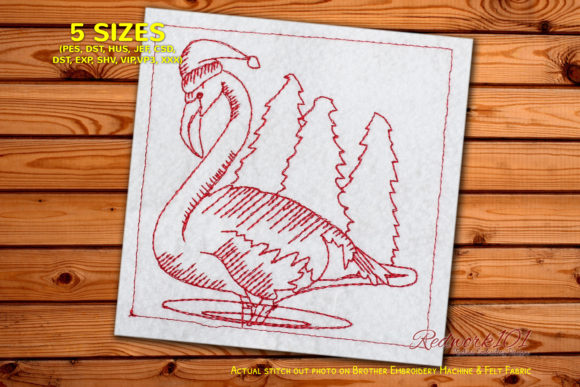
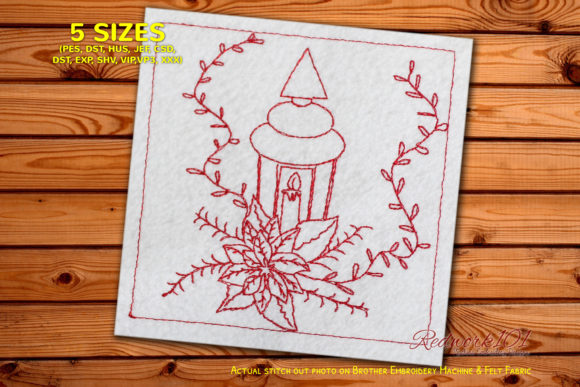
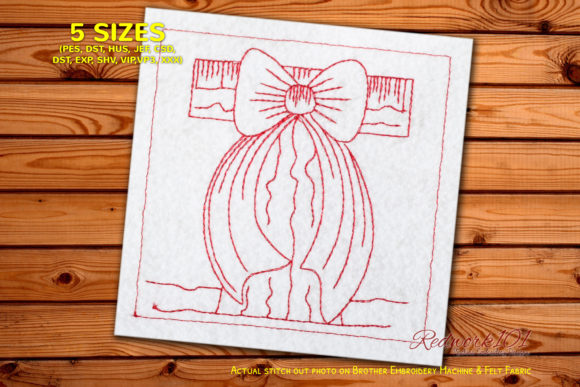
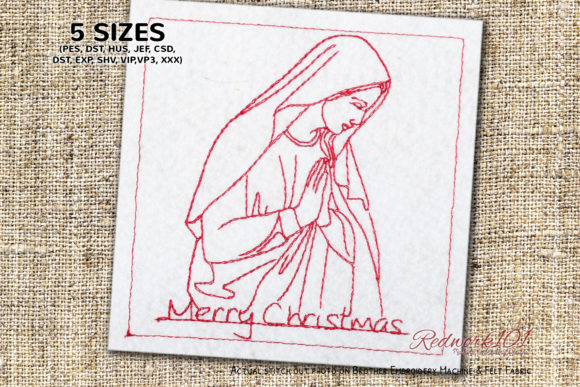
One thing I want to call out: the box stitch shown in the product picture is optional. The description notes that the color of the outer box is different in most of the designs unless it is part of the design itself, and you can skip that color directly. I tested the design both with and without the box stitch. Without the box, the design feels more open and airy, which I prefer for tea towels and baby items. With the box, it feels more finished and structured, which works well for patches and framed hoop art. You have flexibility here, and that is a nice feature for a commercial embroidery file.
If you are considering this design for a cap or a curved surface, I recommend testing it first. The line work is clean, but curved surfaces can distort even well-digitized designs. I tested it on a structured cap front, and it stitched well, but I would keep the hoop size appropriate and use a firm stabilizer. For flat projects, you will have no issues.
Where to Use Caution
No design is perfect for every situation, and the Christmas Donkey Redwork Design has a few considerations worth noting before you load it into your machine.
- Small hoop sizes – If you are working with a 4x4 hoop, you may need to scale the design down. Be careful with scaling. Redwork designs rely on line thickness and proportion. If you shrink the design too much, the stitch detail can become crowded and the donkey's face may lose its clarity. Test at your target size before running a batch.
- Dark fabrics – Redwork is traditionally stitched with red thread on a light background. If you stitch this design on a dark fabric, the red thread will not pop the same way. You could substitute a lighter thread color, but the design's name and aesthetic are built around the redwork look. I recommend sticking to light or natural fabrics for the best result.
- Stretchy fabrics – This design is not overly dense, but any embroidery on stretchy knit requires careful stabilization. Use a cutaway stabilizer and consider a light topping to prevent the stitches from sinking into the fabric. I tested it on a ribbed sweatshirt cuff area, and it performed fine, but I would not place it on a high-stretch area without testing.
- Frequent washing – If you are producing items that will be washed often, like kitchen towels or baby bibs, make sure you use a quality thread and a tight stitch density. The design held up well in my wash tests, but red thread can fade over time if the thread quality is not high. Advise your customers to wash embroidered items inside out and on a gentle cycle.
Visual Appeal and Customer Perception
When I show this design to buyers, the reaction is almost always positive. It has a handmade quality that feels intentional. Customers who are looking for holiday embroidery that is not overly commercial or cartoonish gravitate toward this piece. It fits into the modern farmhouse aesthetic, the cottagecore trend, and the classic redwork revival that has been strong in the craft market for the past few years.
For a small business owner, this design offers a clean, professional look that translates well into product photography. I have used it in printable mockups for Etsy listings, and the single-color design photographs beautifully. It does not require complex lighting or staging to look good. That is a practical advantage when you are creating digital product previews or social media content.
The design also communicates care. When a customer buys a personalized gift with this embroidery, they see the line work, they feel the texture, and they recognize that someone took time to stitch it. That emotional value translates directly into perceived product value. You can price a sweatshirt or tote bag with this design higher than a screen-printed equivalent because the embroidery reads as quality.
Commercial and Licensing Considerations
If you are planning to use the Christmas Donkey Redwork Design for commercial purposes, such as selling finished products or offering custom embroidery services, you need to confirm the licensing terms before you start production. The product description does not specify the exact license details, so I recommend checking with the seller or designer to confirm whether the file can be used for commercial embroidery, digital product sales, or both. Some embroidery files are sold for personal use only, and using them in a business context without the proper license can create legal issues down the line.
For my own work, I always keep a record of the license for every embroidery file I use in client projects. That way, if a customer asks about the design origin or wants to use it in their own product line, I have the documentation ready. It is a small habit that saves headaches later.
Final Thoughts on the Christmas Donkey Redwork Design
This is a design that I will use again. It is versatile, it stitches well, and it fits into a product category that sells consistently. Whether you are making holiday gifts for family, building inventory for a craft fair, or offering custom embroidery services to clients, this design delivers a clean, professional result without overcomplicating the production process.
Before you stitch it, do your homework. Test it on your machine, check the thread color against your fabric, confirm the hoop size, and review the stitch density. If you are selling finished products, verify the licensing. And if you are using the optional box stitch, decide whether it adds to the design or distracts from the donkey. In my testing, I preferred the design without the box for most projects, but I can see the box working well for a more structured look on patches or framed pieces.
At the end of the day, the Christmas Donkey Redwork Design is a solid addition to any embroidery designer's library. It is not a trend piece. It is a classic that will look good on a tea towel this year and on a baby blanket five years from now. That kind of longevity is rare in holiday embroidery, and it is worth paying attention to.